Justice Group ===
[00:00:00]
Speaker 25: You Right. Just, yeah, I know, I understand. Wasn't he, wasn't he here before? Yeah.
Speaker 26: Yeah. I mean, lots of times. Yeah,
Speaker 25: I know.
Speaker 26: Yeah. Your face is, I used to come and do, um, some stuff with beds. Yeah. And then, um, 13 years ago, I used to do, um, programs with corrective services, um, many years ago.
Speaker 25: Oh,
Speaker 26: all right. So all we need to do first is say your full name and then spell it so I don't get that wrong.
Speaker 25: Oh, Margaret Rose Parker. M-A-R-G-A-R-E-T. Cool.
Speaker 26: Rose?
Speaker 25: Yeah. ROSE,
Speaker 26: yeah. Parker. M-P-A-R-K-E-R. Amazing. And full name and spell it.
Speaker 27: Um, Denise Elizabeth Gaia. Um, Denise is spelled D-E-N-I-E-C-E, and Elizabeth is E-L-I-Z-A-B-E-T-H. And Geris spelled GEIA. Amazing, very
Speaker 26: famous name around here.[00:01:00]
Um, say so, so Arnie, maybe if you do a little, are you okay to do a little, like who, who are you, sort of like, how do you like to introduce yourself? How do you identify what that kind of stuff will do first?
Speaker 25: Well, my name is Margaret Rose Parker. I was born on Palm Island in the year 28th of the 1246, and I lived down the farm farm.
Area where we, where Denise picked me up. Now I lived there all my life with my, I had seven children, I lost one, and now I live in 40 18 street. I reside there
and sometimes I always love walking from there from my place to the, into the mission. No. No problem for [00:02:00] me for walking.
Speaker 28: Mm-hmm.
Speaker 25: Cool. Yeah, and I come up to the mission now in general, or now and then I mean to for shop and or get a lift up. And then I come with my sister, sister, go for the courts. She brings me up.
And they have the courts here on Farm Island there
support supportive people in the court, justice in the courts when they have courts and help them.
Speaker 29: Amazing. Nice. You wanna do a little intro if yourself,
Speaker 27: um. Yeah, I'm Denise. I'm the, um, I guess, uh, coordinator of the committee, justice. Well, um, married, I've got six children, six sons, probably around, oh gosh, 19 grandchildren and [00:03:00] counting. Um, but from Palm, but I was born in town, so I was born and raised, uh, raised on Palm, um, in my life.
Love what I do. Um, we did some good stuff at the Justice Group. Yeah, just helping. I've always wanted to, um, get into a thing with, um, into a space to work with people within courts.
Speaker 28: Mm-hmm.
Speaker 27: Um, I did a lot of other work in the community around, um, I was on council for eight years, politician politics. Um, went to education department, then I went to the Department of Health, um, did some.
Youth work with P-C-Y-C-A couple of years. So I've kind of been around in different spaces, but then coming into the justice system, I, and working with the elders,
Speaker 28: mm,
Speaker 27: it's really, um, rewarding. 'cause [00:04:00] um, I learn a lot from them. They come with a lot of knowledge and wisdom, and they're grounded. Mm. You know, they're grounded in what, in what they.
What their core is, their values and their morals. Um, the community justice group doesn't get a lot of accolades, um, a lot of criticism around what we don't do, but there's, we do, we do a lot. I Margaret
Speaker 25: you
Speaker 27: the legislation that, I guess community justice groups were established under. Is, um, justice Lands and other matters act.
Mm. So it's, we've got 12 statutory members, all voluntary, but we do a lot of stuff with courts, helping them stay, try and to [00:05:00] not break a law and getting the elders to talk to them and give 'em a good rallying, eh, and just wake up to yourselves. Um, and there's not enough of that around.
Speaker 28: Mm-hmm.
Speaker 27: A lot of our elders are not, not so much passing away, but just wanting to be left alone.
Mm-hmm. But the ones that do still want to keep going and still got the fire in their belly. Um, our saw coming along and we talked like there's things with the magistrate we meet with. Yeah.
Speaker 25: Police. Yeah.
Speaker 27: Lawyers, prosecutions.
Speaker 28: Yeah.
Speaker 27: And it's all voluntary stuff, you know, like they're not getting paid for it.
Um, and then they're happy that way. They just, they, they're content. Money's not everything, but love and laughter is, we have a good laugh. Yeah. Have good fun. We have lunches together [00:06:00] and we just all throw in and have a little. Lunch by the beach. Yeah, but we're talking about business, you know? Um, we're not funded by the government.
Um, I'm the only funded position and I work alone. I don't have any, I don't even have an admin person.
Speaker 26: What are, what are those simple things you think that can change to support the justice group? Are there certain things you think should be
Speaker 27: my strong belief? Just in the last 12 years working for the Justice Group is I really would, I believe what would work is something around setting up or employing a male person within the justice group that will work alongside the men that keep reaching their domestic violence.
That is a core right there, there was like two dedicated [00:07:00] men in the, in the, on the island. They'll say, I'll work with these fellows and I'll help them change behaviors and change attitudes. 'cause every fortnight at court we see, uh, over 30 could be 30 breaches of the domestic, of the domestic violence order.
Speaker 28: Mm-hmm.
Speaker 27: And the. Problem we have is, as you can see, I'm a female. I, I, I can go and talk to the men, but we need a dedicated male support worker in the courts.
Speaker 28: Mm-hmm.
Speaker 27: Someone that's, um, not gonna be sitting on their hands doing nothing but someone that's got their energy. Um, you know, just the, um, capability to just communicate well too with young people and police and post and, and not to, um, be there to.
Control them or stand over them, but you'll work alongside them and say, okay, now brother, we're gonna, this is how you, we can help you with changing [00:08:00] some stuff around in the home with your misses so you can be a strong, healthy family on Palm Island. Um, but I, I, I, I find it doesn't, um, no one listens to me, just, they just continue to just put money into, mm-hmm.
Gotta be careful because as far as racism, well she needs is here. Um, they put money everywhere else within the services we can pick nothing coming to the justice group.
Speaker 25: Yeah, I do look in my days, they, Denise, say in my days there was no help for me, no domestic violence order. I lost my unborn child.
Ended up with a broken arm with a plate still sitting there and that, look at me, I'm 75 and it's still in my arm. Yeah, no help us for me or my children. We suffered under the, but now I'm glad that my partner, he passed away before. I thank him up above [00:09:00] to help me. The good Lord kept me going. He was, I had a very, very cruel life.
When there was no elk here in them days. Mm-hmm. Me and my children, my children go to the Catholics googly one with a big black eye from his father. Yeah. Seeing no elk. One about like today no elk will me anyhow, in them days. But I just hope that it improve, you know, domestic violence, people help our people, you know, our young people going through the court system and that, it's very sad.
Speaker 26: What, what role do the magistrates have in the process? Are they open to listening or are they closed? How does that kind of work? Um,
Speaker 27: the magistrate we've got now through the, um, special, the domestic Violence specialist courts, um, and they've rolled it out in, in certain places. In Queensland and [00:10:00] Palm Island is one of them that has it.
So we've got a dedicated magistrate, like she's, she's open, we meet with her. Um,
Speaker 28: oh,
Speaker 27: she's very open to any of our, um, recommendations and suggestions. Obviously we can't get into the sentencing part. That's her, her area. Uh, but ours is around, uh, cultural, um, um, capacity where we are advising her of any, um, cultural issues.
Hmm. And she's very open. Uh, we, she'll meet with us at the drop of a hat. Um, always welcoming on court, mor court days. Um, prosecutions are the same. They're, they're pretty good. Um, they'll come and have a chat if they're concerned about a person that's gone before them and the courts. Um, but they look for the welcome and the wisdom of, of the elders.
And, and, and they want them, they look forward to seeing them in court. And acknowledging that they, they know they're there and they have a special place where they sit in the [00:11:00] courtroom. Um, so we, we had to go through a membership drive where we're recruiting. We, we do have young people as well on the community justice group.
Mm-hmm. They're not as committed and dedicated to the group as they ought to be.
Speaker 28: Mm-hmm.
Speaker 27: So we were having our, one of our meeting, several of our meetings around just keeping the elders there. Uh, young people these days just show no interest. They ignore the law. Um, they breach the they before the courts all the time.
Mm. Um, they're too busy out having a good time partying for three or four days nonstop. Um, but that's the social stuff that we've got, the issues we got. But when you. Measure the, the capacity of the community justice group. And you see the elders are showing more commitment. Um, they're turning up at the age of 75, [00:12:00] um, on a second.
Every second Tuesday or whenever we have. They're just not there on court days, whenever there's community meetings, um, engagement days with the council. Um, PCYC has a government agency meetings. We are there, we. Um, we don't, um, just ignore those opportunities because we want to tell people what our services do and, and how we can work together with other organizations.
Um, so we're looking at just engaging with the elders. The, I guess, um, just, just by the last four or five years. Where we've had young people on the just, or people on the justice group and then got out and fighting in the streets and getting caught bringing other, um, restricted alcohol. Well, you can't be on the justice [00:13:00] route and do stuff.
So we had to like, 'cause you got, we gotta have, uh, values and we've gotta uphold them. Um, because that's our strength. That's where it's like a tree, you know? Got strong values, strong morals, and we practice what we preach. Um, and then we branch out to other services and, and people and families. And I guess that's why people come to us a lot.
We're in demand. Oh yeah, we're in demand. But, um, we get to draw the line too for our own, um, health mental health.
Speaker 26: Do you, do you have much engagement with the prison and how that works in terms of in and out and, yeah. You wanna tell them about the prison?
Speaker 25: Yeah, we go and, oh, when we go there on what na day we go, they, they, they see us coming a lot and they get very happy to see us when I see us.
I, [00:14:00] um, Denise. It is very awesome. That's why I love going over there to the prison visit too, because I don't say I go every year. No. Uh, I like us other elders in the communities, you know, come on board. I'm going every year with there to go see the boys. They get happy
Speaker 27: and it's an opportunity for us to talk to them one-on-one while they're there.
Yeah. Um, we meet with the general manager of the prison as well. And, and they're very supportive. The cultural unit at the general Suppression center. Um, just, yeah, they're really, we work well with them, especially when there's issues with the Farm Island inmate. Um, they'll just call me or wanna talk, uh, do a welfare call or whatever.
So they're very supportive and we have a good working relationship with them. Um, we went just recently, three, three weeks ago to the Cleveland Youth Protection Center, [00:15:00] um, for the day just to sit and yarn with the cultural workers out there and some of the programs that they're doing and what can we do, the justice rules to work with the kids in there, and also the kids and the families in Townsville where they're the ones that are sitting the cars.
So we reached out at Olive Branch to the Townsville Community Justice Group and the, um, elders for Change, um, program, and those elders to say, let's come together and can we work a, a strategy with the Queensland Police around how can we work individually with those families and those 10-year-old kids, or 11-year-old kids that are seen in those cars?
Mm-hmm. We reached out and we got knocked, we got rejected. Mm. No one wanted to, um,
Speaker 25: come on board, eh, come on
Speaker 27: board and work with us.
Speaker 25: And [00:16:00]
Speaker 27: more or less said to me, you are on. Come on. Say come on. But some of the majority of the kids are palm on kids too. So the families that are relocated to the Manon for education and um, better access to services.
Um, but yeah, we got, um.
Speaker 26: Yeah, there's something really interesting happening in the state around youth justice and I think there's lots of big programs that get announced or big statements, but very little community level grassroots engagement. Um, 'cause yeah, there's the importance of having young people connected back to where they're from and understanding is so important.
Um, and what's, um, what, where do you get your energy to keep coming back and doing this stuff? How does that, how does that happen in, in the [00:17:00] face of, um, um, struggle or whatever? Just love
Speaker 27: age loving people, I guess. Just mob, just,
Speaker 25: yeah. No one else want come because I support her. See when she wasn't percent for me.
Well, I get dressed and I'll wait and she tell me.
Speaker 27: Yeah, like Simon was saying, it's just, um, because wanna keep them busy too. Mm. Because they still have, elders still have a lot to contribute. Mm. Now there's, there's some elders that just wanna be left alone there. And, and that's fair enough. That's gotta, um, grow old gracefully and, and just kick back and enjoy their retirement.
'cause they, they've, you know, built this place up too, too with their God, sweat and tears, you know? Mm. Then you've got some elders that just wanna. Keep contributing and giving back to their community. And I, as the coordinator to, I touch base with them every day, check on them, see how they go, and every second day, um, I guess it's the, it's the fact that [00:18:00] you see a family that's deteriorating and you wanna reach out and help them.
Um, like we can't fix everything and fix everyone, but if we can just be a, a, a little cog in the wheel. I just have someone, sorry. I think that's the,
um,
um, yeah, I think, um, just love, just love for the people. I went to school too with a lot of, lot of the people here and I look at my schoolmates, they're the same age, and we went through the same struggles, you know. And I see them just like in wheelchairs and some of them passed away and I see their kids around there and it just touches my heart, you know?
I look at them, I went to school with you. What happened to you? 10 years older than me? Just try and help them, whatever they struggling [00:19:00] with, the bad one, you know?
Speaker 26: Wow, that's awesome. Yeah, so much context and information and. I'd love to take some photos. Is that all right? Yeah.
Speaker 27: I think, um, also we do a lot, we do, like we we're selling ourselves short. Mm. Like we help people with their bank, uh, banking
Speaker 25: bank.
Speaker 27: Like I, I'll look at a young fellow, I'll say to him, 15-year-old, 16-year-old, how you going?
How's your mom and dad? Yeah. They go. I said, are you working to get a job? Nah. Would you like to get a job? Yeah. I help them with resumes. Wow. I take them to the councilors, put out an application form. Mm-hmm. You know, councilors, they're always looking for laborers just to clean up the help with the contracting or the projects and that.
Um, I look at a young 18-year-old, 19-year-old, how you going?
Speaker 30: How's your nan? Yeah. Um, you on any, on any income or [00:20:00] anything, you gimme money. You got salary. Ah. So what do you do? How you survive? What, why come
Speaker 27: shame. I'll get 'em. Take him in the something. We'll come up and give him something. Yep. Um, I did that to two young girls probably about a month ago.
I just saw them out at the, at the, um, airport way pulled up. Said a lot of them, that's what they were doing. They're just kicking back Slack, not doing anything. One's turned 18 and one's just turned 17. Um, two sisters, they look like twins. A. And, um, I just asked them what they do and they just, father's in jail, mothers in on ice in Townsville.
What kind of future have they got? Eh mm, dad's always in jail, in and out of this prison system. And, um, I asked them what they were doing with their life. I said, um, and I said, like I said, they asked me actually if I could help them [00:21:00] get key cards for themselves. I said, oh, good. So if you're getting your settling payments, where's your money going now?
We don't want on settling. We got nothing. Oh, so how can you want a key card so we could get on settling? I said, alright. So I, I brought them in to settling, um, I hooked them up. They got Rob in big back pain. Yeah. And they, very, very few, uh, people come back and say thank you. And those two young girls did.
They came and saw me and said. Well, they either call us mom or Nan. You know, auntie outta respect. Even though we may not be blood related, that's just how our kinship is here.
Speaker 28: Mm-hmm.
Speaker 27: Yeah. Our sister May system and Nan, guess what? We get back pain. Thank you for helping us. And the first thing with that young, it brought tears to my eyes.
Hey. I said, ah, that's good. I'm happy for you. It's good on you. That afternoon, they were jumping on the ferry. [00:22:00] And the key cards, uh, were coming that same week. They were jumping on the ferry and going to Townsville and, you know, um, there's, it's called, is it JJs? Oh. With a young kids. Go and buy all these flash.
Oh, it's like a clothing
Speaker 28: store. A clothing store, yeah. And they were like, oh, yeah, yeah.
Speaker 27: And they were like, oh. I go, JJ and I, I'm gonna God all my money. And all this toilet they were talking about and mm-hmm. You know, I said, good on you. That's really good. Mm. Yeah, because they were like, the one, I saw them like probably three weeks ago, they were just standing in the dumps, you know?
Yeah. Soon as they knew that money was coming in and they had to report and, uh, they were happy with that. They just, just, just, just little things like that, you know, where you just wanna see somebody else cross too.
Speaker 28: Mm-hmm.
Speaker 27: And, um, just a little bit of giving you. Just a little bit of giving too many times.
You know, we want to take, [00:23:00] but I was leaving, I was raised by a, a good brother, father, my dad stepfather, but seven brothers, my seven brothers before me. Wow. Mm-hmm. And, um, really had strong values. Small, right. Keep it to this day. Look after one another without, for each other too. Hm. But, but what what upsets me is, is the, um, the level of violence.
I, I, I grew up with, um, violence in my home. A lot of us did. Yeah. My older brothers were just really terrible abusing us when we were little, long on us. Oh gosh. Always making us work, work, work, work. Um, but then you get to the point where you. It's because you grew up with a, that trauma and you know, I don't do a lot of self-healing and self-care for myself.
And I also make sure that the elders [00:24:00] too don't do too much.
Speaker 28: Mm.
Speaker 27: But of self care. Check on them for their 'cause the third things too, and see how they're going. And I take them check on their scripts if they've got their medication. So it's all that the support is not just to get them to come and help with the.
Justice group stuff, but also to just check on them, um, physically too. Mm. Um, eventually know.
Speaker 28: Mm,
Speaker 27: that's true. Now we, um, we help with birth certificates. We help with, sorry, business. Anybody wants to talk to someone in the prison or someone's passed away. We could get a, a, an emergency visit, um, with the parole board.
Speaker 26: And how do you know how many people from Palm might be? Incarcerated at the moment, or, yeah,
Speaker 27: there's, there's a high level at the moment, um, from Palm. Mm-hmm. And there would be around over 50, [00:25:00] 60. Wow. That's quite a lot. And, and these are the ones that are, it's not a swinging revolving door for them.
Speaker 28: And
Speaker 27: we, we sit down and we, we, we, I try and get the elders to tell 'em or draw it out of them.
What can we do to break. So cool that swinging door. So it wants swim, you know, revolving door. Um,
Speaker 29: yeah,
Speaker 27: we, and we also getting women. Women, yep. That are becoming, um, perpetrators of domestic violence. Maybe because they've had enough of being bashed by their partner now they bashing their partner. My partner, um, that's coming up a lot now.
I'd say about four or five women. Got out there and flocked the partner up with a chair bar and a stick and all.
Speaker 29: Mm-hmm. Um, yeah,
Speaker 27: we have, um, [00:26:00] we probably have about 2015 of our kids in Cleveland. Used to, yeah.
Speaker 28: Yeah.
Speaker 27: But yeah, the, the level, the alcohol fuel level of violence is. It's, it's horrible. Mm. It's horrible to sit in court, which is what we have our after court.
We have our sit down reflect sometimes where, mm, we've gotta just get rid of some of that negative stuff that we Yeah. In. Mm-hmm. It's, um, which is why I believe we should, we should have been in the force to support them and sit down and act like this and yarn with them about that. Serious talk about.
Your behavior and what, um, trauma you are inflicting. Not just your partner, the mother of your children, but under your children, your neighbors, your brothers and your sisters. 'cause domestic violence affects everybody's True. [00:27:00] Because bring shame to the community too. They look there, bash woman B, his daughter, you know, that type of thing gets out into the community.
Yeah. And the sad thing too, that we're also seeing. Because one of our roles, tools we forgot is our mediation. We do mediation or peacekeeping where we just want families to just, and people to be at peace with one another. Mm-hmm. Like you don't have to talk to each other every day, but respect people and just, if you don't want to talk to someone, that's fine, but you don't have to go.
Yeah. Like the street fights too is not healthy.
Speaker 28: It's not
Speaker 27: good. It's not good for our young people to see our children and it's fighting, having a punch up in the throat, in public places, anywhere. Mm-hmm. Um, what type of message are we sending to, um, our children? Our future? [00:28:00]
Speaker 25: An education too is important for our children.
Yes.
Speaker 27: Are we going to the schools? Hey, yeah. We address the bullying in schools. Mm-hmm. We do that. Wow. We could store ring us up and say, look, can you come down to day and the sale this day? So, yeah. Sorry. It's us. Say
Speaker 25: they can make a real role model. You know, you see my two great grannies. Hey, one in one, one is with the roosters and one is with the Broncos.
They lived in, they in south. They made it from, from a St. Michael's OB Catholic school. That's from their mother. A little short woman. She, her seven children, but she don't let me babysit 'em, you know? Um, babysit any of my great grannys.
Speaker 28: Yeah. Right.
Speaker 25: Well, she just like, I like to see with other parents, you know?
Mm-hmm. Send them to school and, you know, make a name for Palm Island because they love football, their children. Mm-hmm.
Speaker 28: Yeah.
Speaker 25: I reckon Rugby league [00:29:00] is the greatest game of all our children. They can achieve their goals.
Speaker 28: Mm-hmm.
Speaker 25: Can be something and make, you know, us in Palm Island feel proud. I'm not just what's name saying something terrible about Palm Island, you know?
Speaker 29: Yeah.
Speaker 25: It's not right. In our days, eh, we never get that kind of education. We lived under the rule. We get a march like them Soldiers no good. Get a caning. I get a caning. No good. It's no good living under the hat. We want future for our future gen generation. You know, something good at little, uh, future generation, you know, make, make us proud and make Palm Island proud.
Stop talking negative about Palm Island, you know?
Speaker 28: Yeah.[00:30:00]
Speaker 26: So, yeah, that's us. Amazing. Thank you. I might, I might take a few pictures. Yep. Yeah.
Elders Group
Palm Island, Queensland, Australia
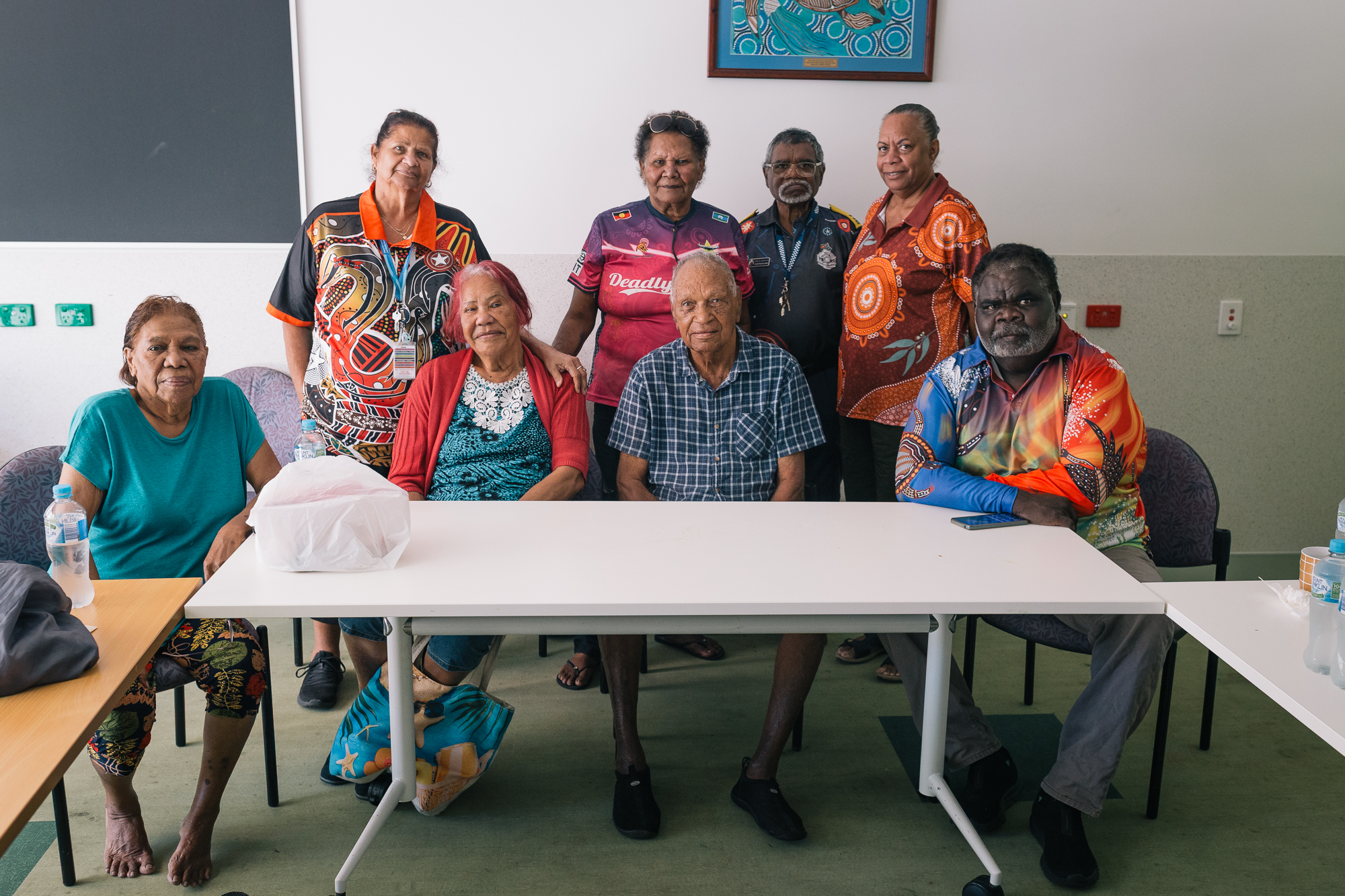
The Elders Group, guided by Ben, serves as a vibrant conduit for preserving and sharing the profound stories of Australia's Indigenous communities. Rooted in the rich tapestry of places like Palm Island, Calcadun country, and beyond, Ben's journey is defined by heartfelt yarning sessions with elders like Ethel and Frank, capturing the essence of life through storms and celebrations. His collaborations with the Elders Justice Group and on projects like Orange Sky weave together narratives that reveal the nuanced, dynamic lives of these communities, aiming to create publications that reflect their resilience and wisdom. Engaged deeply in the art of storytelling, the group is dedicated to illuminating the myriad voices and experiences that shape their world, fostering understanding across Australia.
Stories like this matter
Help amplify voices from communities that deserve to be heard. Share this story or stay connected for more.