From Floods to Forty Tribes: Yarning About Healing, History and Recovery ===
[00:00:00]
And, um, oh yeah, yeah, yeah. The more I, the more I talk to people, the more I get to understand like, what's the actual community based narrative impact? And I think the one thing we're interesting is like, what's a physical artifact that you could build or create that's a memory piece or brings people together about it, or, and that's where I was, that's where I was getting at with that, the data stuff, because data.
People think of data as, um, in the cloud, right? The groups need to use it too. Thank you. Um, but data actually is always stored somewhere physically, like always, whether it's in some server under the sea, some Chinese desert or whatever. But if you can create your own server that's a physical representation of your own memories, data archiving.
Hmm. And then you can have everything on there. You can have language, you can have history, you can have whatever. Um, and you could turn it in. I was thinking like, [00:01:00] um, you could even like turn it into anything you want. And then as information is being added, you can actually see it represented somehow, like a tree or something, and then it's like it flashes up or something when there's new stories being generated or.
Like engagement and just interesting to have the community understand that the community owns that. And it's not like being accessed by other people in inappropriate ways. Like it's safe, it's secure. Um, all those things, Ben, just me about helping, um, those in regards to having a platform mm-hmm. Where it's not shared on the local and all stuff.
Yeah, yeah, yeah. They're, they're, um, they're such a fascinating, um, group of elders there and like yeah, there's a fascinating sort of, um, mission in the middle [00:02:00] of town where they just started building houses without owning the land or that like properly and land and yeah. It's this like sort of feeling of just, just go, just do do what you need to.
Yeah. You talking about. Little camps. It's on a hill. Yeah, on Strat. I, I drove through there. Yeah. Yeah, because uncle, um, he, um, is a really quite a well known carpenter and started building his own own houses and stuff and, um, yeah, the Ruker family. But yeah, and like, um, I think there's just this interesting energy that keeps bringing me back to Palm Island for some reason, and.
To, um, there was a few people that reached out to Rachel about me and storytelling and stuff, and just feels like a really good, like, base to try some story based stuff. And you had a moment with Winnie? Yeah. Oh yeah. Well, Willie leads up that, um, [00:03:00] elders reference group too. Um, cool. Maybe she can try and coordinate something tomorrow, even today for Yeah.
So open. Yeah, yeah, yeah. Yeah. She should be next door. I, she was there Monday. I know. Obviously seeing issues in there today, but Yeah. Yeah, like I've, I'm, it's, it's, it's so interesting. Like I'm usually running between things, but it just feels nice to be flexible and have time. And even the health. Have you spoken to?
Yeah.
Yeah, that's right. We've got a men's gathering today. Oh, do they? Yes. Um, yeah. Most Wednesdays, yes. They usually have a lunch. I've been over there for free lunch sometimes. I'd be keen to hang for sure. Actually Well, and then the women's groups have been, 'cause they, they're often on a Tuesday and they've changed theirs to today.
Everything's on today, but cool. Yes. Oh, so the bingo on tonight. Yes. Yes. Not gonna miss out. Bingo. It's, oh, I be, am I allowed ladies won? Women over? [00:04:00] I'll watch from the outside. Yeah. But you can go there and interview I suppose. Yeah, yeah, yeah, yeah, yeah. Yeah. There's, um. Um, that so good. Those ladies actually enjoy it.
'cause I see 'em rocking up here just before it's snow and there's no smiles and there's a big group of them. Yeah. That's awesome. Yeah. Well there's very little entertainment, you know. Mm. Yeah. Bingo night. Yeah. A lot of those ladies a shock actually. Yeah. But it might be good to, yeah, because our four will be doing his thing.
That's a Wednesday anyway, isn't it? It's just the women will change this, so that'll probably be good to, you know, do you know what time that is? Like, is it like a lunch thing or? It must be about lunchtime only. I was just talking to Janet when I was on the plane this morning about what, um, 'cause so that doesn't clash with court on a Wednesday and she said no, it's usually, they usually have the mens thing when court's sort of wrapping up something Must be about 12 or one or something, I reckon.
Yeah. Was there court this week with that public holiday? No, I don't think it was anyway, [00:05:00] but yeah. But 'cause he used to run it every fortnight. Now he's doing. In the group every week. And that's why I said, well, as long 'cause his role as court support worker mm-hmm. It's meant to be at the court. Um, but that's why Janet said now they usually have it when it's wrapping up court.
'cause courts are often finished. Sometimes it goes to a three, but often it's finished by one-ish or something, you know? Mm-hmm. Um, but yeah, so that'll be on today. Cool. Awesome. Do they still run on the, is he having it over here at the health service still? Yeah. Yeah, yeah, yeah. So that's just, yeah. Cool.
But I think the key one would be that elders group. I reckon there's some characters in that in the group.
They got a long history of the island too sick. So, so good. Yeah. Yeah. And, and the thing is too, like, yeah, I'm super pumped just to go to where they feel comfy, make it easy, like whatever is, um, the approach I'm keen on. You know, we'll, [00:06:00] there soon, as soon as I see you, they'll, yeah. And, um, yeah, and just see that's it in the next couple of days that, you know, she might be able to.
Mm-hmm. Yep. Because I seen a meeting up, was it last week or a week before? I think. Yeah. Yeah. They meeting here or? No, she actually had him over at the health precinct. Oh, right, okay. Yeah, yeah, yeah, yeah, because that's where they were meeting. I wasn't sure if she'd. Might just probably easy to give prepared, but what else you need to finalize your project?
No, it's all just as much as I can do. Um, and then I, I almost like spend this time doing deep sort of stuff in community and then afterwards just pull everything into one place and then start to just think about what's the thematics and like how do you bring this into an artifact that's. Like deliverable to something.
And then, um, yeah. The one thing I've [00:07:00] been really interested in is, um, as you database these stories, you can then run analysis on them to look at like what are the key thematics, what's like some of the demographics, what's what? And I think really important too, to. Um, send what you've captured back to the people that you've engaged with.
Mm-hmm. And so they can see it and feel it, be engaged, but that's part of my whole storytelling process now is how do you continue to show that story is agency like that does stuff. It's not just some like quote that sits somewhere in a fancy book or something. I think it's like, there's more to it than that.
What if it sit When we were sitting here talking, the only thing I think of is the other, um. November. Oh, yeah. Oh yeah. You heard about Yeah, it's, they, they gave me the heads up. Oh, okay. Um, but I, is it, how is it going? Is it, well, we're in, uh, phase three now, so the next six months we working implementation.[00:08:00]
So we 1.9 million. But this is all about because the history. Yep. And a lot people, elders and all that stuff ago were all sent here. If he was to survey community right now, you'll find that most people wouldn't even know their traditional tribes. Mm. And all that stuff. And I actually sat with, um, I had a quick yarn with Chris.
Now they've been doing a lot of, um, family tree stuff in the schools. Mm. Which is good. Oh, okay. They bring some of them kids actually, they were going back to some of the grandparents and all that, and they can find that they belong to six eight different tribe because of all the mixing over the years locally on farm.
Yeah. But look, I think the, the essence of that program. Is all about. Okay. Through social emotional wellbeing. You know, most of the men, if he was to do a survey, why are some of the issues or social problems in community? The biggest scoring one is, you know, alcohol and drugs, but the second one was always loss of culture.
Mm. Over many decades. Just because of the history. [00:09:00] Yeah. How this whole island was set up. Yep. So we put it for that grant. So it's all about, you know, getting groups from whatever tribal groups, taking 'em back to country where they can leave something. Mm. Um. Do they have a copy of like the Tindale records in that here at the knowledge center or, yeah.
See, yeah. Chris Evers was telling me that the 40 Tribe, 40 tribes was the first Tindale collection back in the 1930s. Yep. But from 1918, all the way up to the seventies, people were relocated here. Yeah. Yeah. So over the course of more than a decade, uh, you know, this bloody Yeah. It was about 60 odd years.
Mm. Um. More and more all different people were sent here at different points of time to legal exemption from the act. Yep. Now, um, the reckon it's, it's done on the world of good for them to realize Mm. We get to talking about, you know, cultural law, terms of skin, basis of who could [00:10:00] be your partners and all that stuff to make sure, you know, biodiversity's pretty good and, um, I think.
Get, understand, listen, but bring something back to the next generation with their sons and to be better fathers and stuff. A lot of people, they're very, in terms of knowledge and all that,
you might know certain names we wouldn't actually know. You know what I mean? KC would be a good place to visit. Yeah. Uh, you gonna need? Yep. Yeah. Well they were running the show yesterday. Um, they had the barbecue going there. Yeah. Um, and had a few people hanging around there, so, um, yeah. Yeah. Definitely go there.
Yeah. And like that the idea is, is almost like time to sit down and capture things that flow from [00:11:00] people's memory and minds, and then continue to grow that into a knowledge base. Um, so that, like, that idea of. Especially like, um, last time I was here, uncle Allen and I went up to the, um, the lookout and he just started to share.
And so that's like 20, 30 minutes of him just trying to work out. He had his little book there and he was trying to like, regurgitate all the knowledge that he had. And, um, yeah, so it's super cool. I could show you. It's like, and then I keep, I think, um, 'cause I've been working with Richard and him around like, what is this?
Mudra storytelling thing. And um, I think sometimes uncle feels like he, he might've shared in the past or something, but nothing happened or his situation's not moved. And I think the more that he can feel like by sharing things happen and that does stuff and it changes and is like powerful for him. Um, [00:12:00] 'cause I think he's really dedicated to working out how he can.
Go back to being an artist and not be employed somewhere else. And so like, yeah. What's the mechanisms to Yeah. Make that happen and, yeah. Oh, so you're doing that work with them all that time, right? Yeah. Yeah. Just like my, my, I'm sort of like project agnostic in a way. Um, my whole life's about story and almost like what does it feel like for that storyteller to have agency over it and yeah.
Feel dedicated to. Wanting to share it. And, and as you said, that passing down of knowledge is massive, right? Like Yeah. Yeah. Um, and I work with a lot of kids in youth justice, so I, I I see lots of kids who are missing something. Yep. And some of the people I work with, like the elders on Australia, have the ability to like, bring them along that journey more.
And I think this western construct of detention [00:13:00] and like punishment is not. Doing anything. Like for them especially, it's just making them more lost or more disconnected or a lot of 'em feel like, oh, I have to get a job. I have to like toe the line. I have to, and that's kind of, I think that's what you do after you feel good about yourself, right?
Yeah. And that's what the stuff, you know, it's all the counseling, support services, just sitting on country for a while, learning something new. But see if they can progress it further later. Yep. You know, we just create the platform for them to go away. Yeah. And do all that stuff. Do something back. But it should be ongoing, you know?
Mm-hmm. Shouldn't be a one off thing, but again, we'll just start that momentum for it. But, um, that's what, yeah, that's what the government is not working out at the moment is the timing time thing. I think they think that if they, if they are really tough on something and they show the public that. We're sending [00:14:00] these kids to these week long programs to fix them.
Um, it just needs way more time and connection and focus. Um, yeah, I don't think, I don't think I learn anything in life in one week. It doesn't. Yes, you want to change. If you get back to reality and you sort of lost that week, you know it's gotta be going. Yeah. Yeah.
Oh, is it bugger still or not? It's still buggered, yeah. Oh, is it? It's not if pull, it's, there's a car in there. Is it? No, it's not what I, why do you need the roller? Well, do we want to use it to garage the cars? I mentioned to him the other day and Mel said, oh, she said, I think that rollers again. And I said, I hadn't heard anything about it.
Also because they got two now. It was working again. All I did was [00:15:00] flip the switch on and off. Yeah. So obviously at the moment,
get there to get it because there's a service number there. I've rang them twice. But they never got back to me. Yeah. I rang him. Then the other morning I just came and flicked it on and off, but then I went back the next day. I bloody manually overnight. Yeah. Yeah. So I, yeah, that's, I do car.
So you just need to lock this afternoon if she can. No, no. I can go down there door. In trying so she can put it back garage tonight or whatever.
Awesome. One of those bloody um, boys [00:16:00] come when you be there too. Yeah, that'd be their first thing in the morning to open it too. Women's shelter. And yeah, just horrible that, yeah. Like I said, I, I'll try and call them again today, but last time I listed on and off it worked. Yeah. Yeah, that's, and that was the last I heard.
So we, and we were just, 'cause we were talking about the cars and they were saying we the garage, someone to take it home. And I said, oh look, no. I said, what a shame. We've got that space downstairs there. We could easily put them down there. It must be a cheaper motor. Yeah, yeah. Yeah. Anyone burn out Story gas.
Yeah. Yeah. But what, what type of questions you've been asking communities. Yeah. Um, so most of the time it's revolves around, like, I always try to work out how people like to identify themselves. Yeah. And so it's just an open question. And [00:17:00] then a little bit about like their connection to the community.
Mm-hmm. Talk a little bit about like what their. How they feel and about being connected to here and to other places. And then it's almost like, it's usually like feel 'em out, right? And then just create this moment to be like, oh, where were you when the floods happened? What was the impact of that? What was some of the, what were some of the, uh, it's, it was so varied.
Like sitting down there talking with Bob, they're like, um, fridge was broke, had to throw it out. Washing machine got flooded because something happened. Um, couldn't go to the kids, couldn't go to school, was a big one that was each coming up. Um, a lot of people were sort of saying like, it was, there was more impact on the mainland than the island.
I, that's kind of their first almost response. Yeah. Um, someone, they're talking about the lack of a, um, probably shelter. Yeah. Yes. Yeah, yeah, [00:18:00] yeah. Lack of a, like some follows down there this morning were talking about they wish they had a, like a shelter, like in other communities. Um Oh yeah. Yeah. Just heaps of different stuff.
Like some people were trapped on the mainland so they couldn't come back. Um, just, yeah. Yeah, yeah. But yeah, just a bit of, bit of everything. Yeah. Um. And people probably do, um, think about, um, because I guess some of the bigger impact in, in Ingham and Townsville, people probably talking about is more, um, like the tidal surge.
Yeah. That, yeah. Not that it doesn't happen here, but the rivers overflow. Yeah. In town. So what, what happens here is like the coming down.
Yeah, we, we only just found out the name Yeah. Happened here. Yeah. And lots of yarns about the free beds. Lots of yarns about the free beds and yeah. The, [00:19:00] they're all delivered. You know, I don't know if they all are, but I, I'd like to think most of them are all that other furnitures coming over today too, to chase it up stuff.
Is it coming today? She said it'll be crossing the seas today. I said, okay. So I'm hoping that's why Tyson's here, because he'll be, because there's that much of it. I'm just was worried where it end up. But, um, because I, I was talking to the ladies from the justice group and Yeah. They were talking about the bed.
Yeah, yeah, yeah, yeah. So that's, we can just get them to put it together downstairs in that open area there, just so they can just carry it straight across because Yes. Yeah. Yeah. We still can put those, we might just. Because we can't technically take those desks back to the CFC yet until the work done. No, no, no.
What, just walk downstairs until Yeah, yeah. Change everything around. Yeah, yeah, yeah. Might as early next the, this week. [00:20:00] That's timeline, I reckon. But you, and we almost had to go and pick up. Stuff off large Monday. No, but again was cu bloody story. We're just talking about the building that, building that the weather.
Yeah. But you see, even with our workforce, the impact up here, like of course, of course those places. Peace of quiet. You haven't got kids running around. That's right. But um, that three people here once upon a time. Yeah. But I think even with our services, you know, yeah. We had to, um, pull together, especially when that building went down and um, just getting it together.
But. Yeah, it's a hard one because like I said, that moment in time it's sort of like you just got over all the rain, you know what I mean? Of course. And you're just glad that the sun came out, but yeah. Yeah, yeah. I don't know. I'm just trying to think what I went through during that time. Yeah, just sick of the rain.
Yeah. Yeah. That's a lot of it. Yeah. And we were still moving around. I mean, even the food [00:21:00] passes we hand out. Yep. Um. That was pretty good. Um, we getting some of that stuff donated and all that and the amount of bananas we delivered that day, there was about 12, no, there was about 20 cartons of bananas.
Yeah. So we ended up just, um, you know, just offloading it at the front there after we gave all that to elders because there was a series of barbecues that Rainbow Gateway held. Yep. And we were just helping out giving those food passes out at the same time. Yeah. Yeah. See most of those mob that was involved in it, they've soon left now.
Yeah. 'cause Steve Irvin was with Rainbow Gateway. He is gone another, I think another one to get some informa or data information about the rain Bloody thing. He's left too old, Mr. Biss. Yeah. Yeah. Um, well he is a scientist too, by trade. Yeah. Right before he became CEO and, um, perfect. He monitors those things, you know.
Um, far out. Yeah, [00:22:00] he would've been good to have a quick little yard, but, um, I think we had 30. Um, and I think that, um, something that, that's right people, unless you're involved in some of the recovery of it, as in the physical recovery, people might not see it, you know? Um, except for, you know, they're probably on the receiving end of something, which is good, but I always find.
Um, 'cause it's a smaller community, I guess too, but any recovery effort, palm's response is very quick. It's very, very immediate, you know? Yeah. Like, it doesn't matter. Like literally the next day, the next morning, as soon as the safe as possible, you know? Yeah. Safe to do. So people are around like doing stuff, you know, like literally cleaning up everything like, you know.
Yeah. Um, and getting people together to meet, to coordinate stuff Who's doing what work. Support from if needed. Mm-hmm. It, um, really comes together quite quickly and [00:23:00] easily. Yeah. I think 'cause people know who's who as well and it's very quick to, to pull things like as in meetings together to coordinate support and those sorts sort of things.
I think the three main companies council pick around the gateway, the time was all that stuff through the LDMG. Yeah, I sort of like even sitting at those local disaster management group meeting, now the rain's gone there, it's just continue to go down, but there's no flooding localized. But we were meeting twice a day.
Sure. And um, I suppose the mayor sort of leveraged that process. Got some outcomes out of it. Yeah. Because there's a hell of a lot of friends online. They've all put their hand up to donate a lot of stuff. Really? Yeah. True. Yeah. Food banks sent over all those pallets. Yeah. And 'cause there was no, the usual barge wasn't happening from mob, you know, so they had to organize a, a barge or use the ferry from Townsville to, to get stuff over.
I think Ergon had some, you know, some sort of, um. [00:24:00] Um, barge or something coming over 'cause they needed to get stuff over. So people just chucked other stuff on that to sort of, to get it across. So, and you know, and the things that we really helped out with, because again, that's what people said they needed, was boxes of cleaning stuff because we knew in the humidity and you've been, there's all that rain.
Yeah. And there's no power for three or four days. Everything just goes moldy and yuck. Like it's horrible. So they were, some of the things. Things that I think, you know, um, people sort of responded to really quickly as well. So how many of those cleaning boxes come over? 'cause there were still five left a few weeks ago.
Yeah, yeah. I went and told Kate, I said, grab it. Take it to your clients. Yeah, yeah, yeah. I think it's, these are, I think those couple, there are still cl but they, that's 'cause they came over late and I never knew what they were and they had my name on it and I was like, I don't remember ordering anything.
And it was the cleaning boxes. They didn't come over with the first lot, which. There was 30 boxes of bananas. 'cause I was just looking [00:25:00] that up. Was it 30? Yeah. Yeah. Well that's what Vicky, that's what I said we'd take, but they were the best quality bananas. Oh, they were just amazing. True. Yeah. Amazing. I think, was it Woolworths that had, yeah, it was Bullard.
It must have been from their distribution. Yeah. Yeah. They said they had something like five in the couple of hundreds. Yeah. Yeah. I'm pretty sure it was 500. Yeah. Couldn't get rid of. When I seen the quality of 'em over here and the week later I went to Townsville, the Coley of the towns shelves were shopping.
I know they were better, so I don't know why though. I reckon they probably were stuck in Townsville and couldn't, 'cause the roads were cut. I reckon they couldn't, couldn't distribute 'em. I don't know. It was just a random call. We got some Woolworths saying they had hundreds of boxes of bananas and I'm thinking they were gonna be like ripe ready to, no, they were bloody perfect.
Like, yeah, I think best quality. Yeah, some. Yeah. Someone told me the other day, or I saw somewhere that bananas are the most sold product in a supermarket. Yeah, right. Yeah. Which is pretty wild to think about. Like that's why they must have a big distribution line, right? Yes. Yeah. Oh yeah. That's what I thought.
I thought, why would you need [00:26:00] so many like bananas? Like hundreds of boxes of them. Yeah. Which must have been pallets when there's a pause, maybe they're like, I've gotta get it out there. Yeah. Yeah. Well, that's what they wouldn't have been able to go through any, all the highways were cut either way. Yeah, that's right.
Sounds yes. Yeah, because I was, um. Oh no, that was before. Was that, oh no, that was at Christmas. I was supposed to drive down there, but yeah, because Mackay got a lot of rain in that too, and Bowen, and it was, all the roads were cut either way. So I reckon they already were sitting in Townsville probably.
And they couldn't, couldn't get them anywhere. So they thought, well, so they just distributed them to whoever would take them. And um, and maybe, um, maybe we could sit down and have a yarn, proper one so you can feel what it's like. Yeah, yeah, yeah. Interview. Well, we can do it later on. Yeah, of course. Yeah, mate, this, the whole process is just like when it feels good and like Yeah.
Finding somewhere that's like nice and comfy and Yeah. Just hanging out and talking. No, we can do it later on. Yeah. Um, cool. I [00:27:00] think try and capture everyone here that you got now. Yeah. Um, most definitely the group. Yeah, if Winnie can pull 'em all in the room. Oh, that'd be amazing to have 'em all in one.
Yeah. And just let 'em have the conversation about it. So good. Um, yeah. Yeah. Knowing some of them old girls, they'll throw a few fun laugh there through themselves. That's that thing of just continually capturing things and reflecting on them and Yeah. Yeah. I love that. Like, there's a, there's a mix between like creating this like.
Formal awesome video piece or whatever, which is good sometimes, but then there's the community level just yarns and capturing that. I think flex Super important. Yeah, yeah, yeah. Um, yeah, make it more flexible for them and Yeah. And even like being able to, I'm trying to work out what's the simplest way to actually capture that, uh, for the community to do that.
Mm-hmm. Because there's some really cool ways now we can almost use. [00:28:00] Like the tools you already use, whether it's like a WhatsApp or a text message. And then you can automate that to go somewhere to be like stored and caption. And so how you can, like, I love this idea of like destigmatizing what's a story is.
Mm-hmm. And like everything is a story or a yarn or a narrative. And it'd be good to get voices too, because ums he go the high school. Yep. Yes. Yeah. Yeah. Um, yeah, be rad. It's so cool. Yeah. Because kids, especially like when you get kids on a video and you say, we're gonna interview, they freeze. Yeah. Yeah.
But if you get them in hanging out, they go enough. Yeah. So that's super fun to be able to do that. I remember trying to interview one of my daughters classes once, and I've sat them down and put a camera in front of them and I was trying to ask them questions, and then they were just like. One. One. Yes.
Walked away. Yeah. Yeah. And then came back and then [00:29:00] when they were all playing. Yeah. That's when you capture stuff. It's, yeah. And I remember I went, I, um, it was a young ranger Wado who was doing some training with the kids at school, and I went and videoed him, just walking around with the kids doing like mangrove like, um.
Training and stuff. I've seen that footage. I've seen that footage. Yeah. Yeah. And you've got that footage. Yeah. Ah, alright. With the drones and all that stuff. Yeah. Big drone. Yep. Yeah. Yep. Yep. I've got a little drone to float around. Yeah. The Rangers have got all the good gear. They got all the good drones and stuff.
Council actually donated stuff. Yeah. There's some good drones, eh? Yeah. Yeah. I love coming here and playing with all their stuff. Yeah. Yeah. They got a little underwater one and like, oh, wow. Yeah. Cool. One. It's hard to actually get a shot in town though. 'cause the airport's you so close. It's, it cuts. Yeah, because so and step when they came the other week to put the, um, was it the youth festival one?
Yeah. Remember they couldn't get any, they got some footage further down, but because the heli [00:30:00] pad is there, airports there, it's the worst spot right in here. Yeah. Yeah. It's super hard. I remember getting a shot here. Um, I don't know how, how we did it, it was a few, five years ago now, I think with Orange Sky.
We got this real nice shot of the, um, this part of town, but maybe the restrictions have changed. Yeah. Might have. I wonder even if on weekends it's different. Oh, maybe. Yeah. There's no char regular flights, but you know. There's still the chance of the helicopter, but yeah, because I don't it good because you gotta register your device.
Yeah. I mean, years before you did it. Yeah. You can just fly anywhere. Anywhere, yeah. Right. Yeah. And um, maybe that's what it was. That's when it was before there was any regulations around. Yeah. I was in Alice Springs the other day.
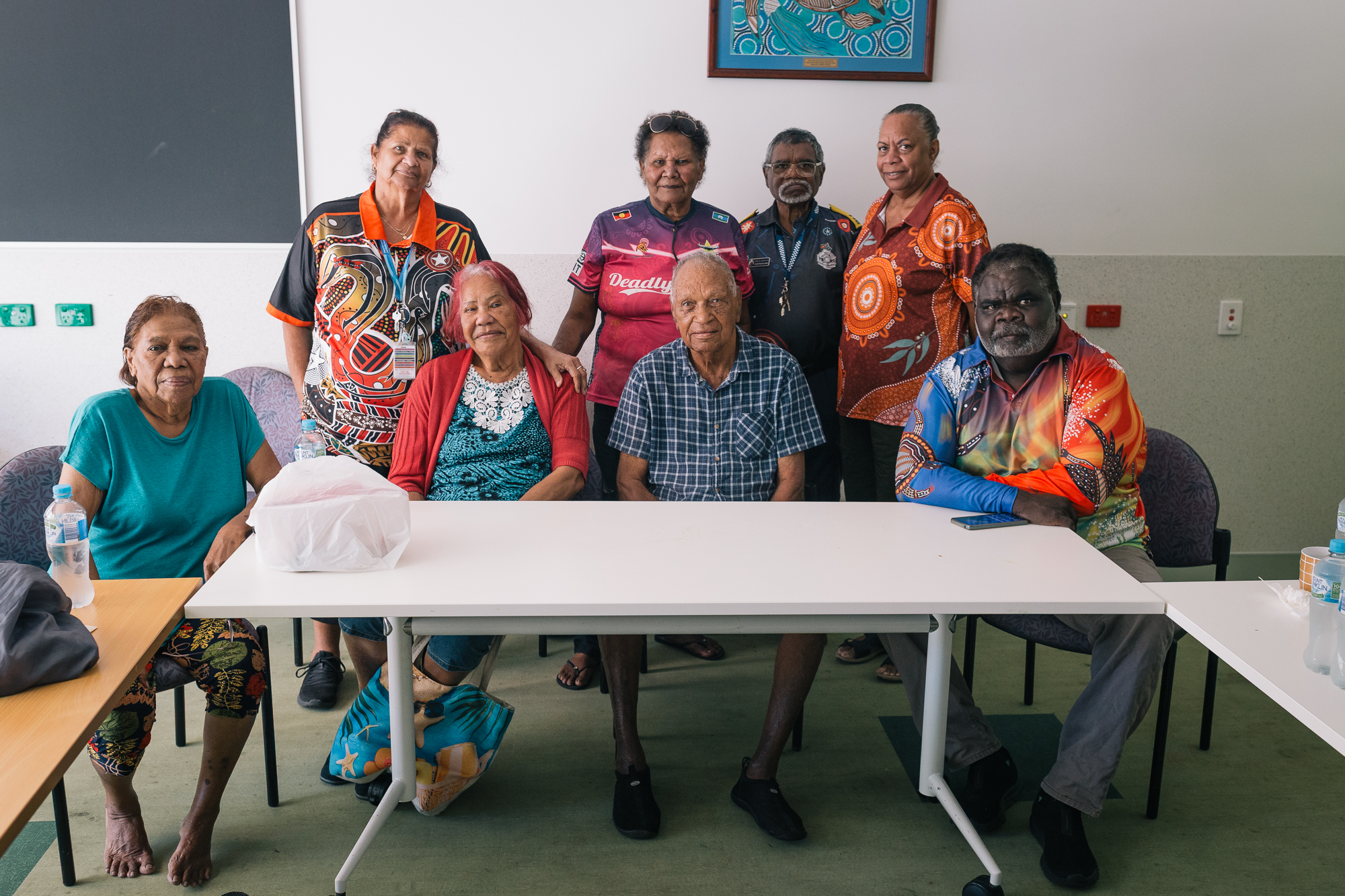
Elders Group
Palm Island, Queensland, Australia
The Elders Group, guided by Ben, serves as a vibrant conduit for preserving and sharing the profound stories of Australia's Indigenous communities. Rooted in the rich tapestry of places like Palm Island, Calcadun country, and beyond, Ben's journey is defined by heartfelt yarning sessions with elders like Ethel and Frank, capturing the essence of life through storms and celebrations. His collaborations with the Elders Justice Group and on projects like Orange Sky weave together narratives that reveal the nuanced, dynamic lives of these communities, aiming to create publications that reflect their resilience and wisdom. Engaged deeply in the art of storytelling, the group is dedicated to illuminating the myriad voices and experiences that shape their world, fostering understanding across Australia.
Stories like this matter
Help amplify voices from communities that deserve to be heard. Share this story or stay connected for more.